

Managing freight flows across the Dover Straits
The Dover Straits is the UK's most important freight corridor, supporting a substantial proportion of UK–EU trade and the operation of supply chains across the national economy.
Electroporte is developing strategic inland infrastructure designed to support more reliable and resilient freight movements across the Dover Straits corridor.
Supporting ports, fixed-link operations, freight operators and national infrastructure.
The Dover Straits
The Dover Straits is the UK's most important trade corridor, handling a substantial proportion of UK–EU freight movements and supporting supply chains across the national economy.
Sectors such as food, manufacturing, automotive and logistics rely heavily on reliable and time-sensitive freight movements through the corridor.
As trade volumes increase and supply chains become more complex, the effective management of freight movements becomes increasingly important to:
-
Economic resilience
-
Network performance
-
Supply chain reliability
-
Long-term competitiveness
These trends increasingly raise questions about how freight movements across the corridor can be managed more reliably, efficiently and resiliently in the future.


Why the current system struggles
A substantial volume of the UK's export and import trade across the Dover Straits relies on time-sensitive freight movements carried primarily by road.
This trade is vital to the UK economy, particularly for sectors such as automotive, manufacturing, food and logistics that depend on reliable cross-Channel supply chains.
As freight volumes, operational complexity and resilience requirements increase, the management of freight movements becomes increasingly challenging.
Over time, a range of interventions including Operation Stack, Stanford West, Brock, TAP and more recent freight-management initiatives have sought to address operational pressures affecting the corridor.
The challenges affecting the Dover Straits corridor increasingly extend beyond day-to-day operational management and can be grouped into three broad themes:
-
Channel disruption and network resilience
-
Transport decarbonisation
-
Economic growth and productivity

Overview
Managing freight flows across the Dover Straits
Channel Disruption and Network Resilience
The Dover Straits corridor operates under significant and increasing operational pressure.
As freight volumes, resilience requirements and supply-chain demands evolve, more coordinated and infrastructure-led approaches to managing freight flows become increasingly important.
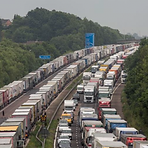
Brock and TAP
Temporary traffic-management systems such as Brock and TAP demonstrate the operational pressure that can emerge when freight flows become concentrated and difficult to regulate, creating wider impacts across transport networks and surrounding communities.
The repeated use of such measures also raises wider questions about the long-term operational requirements of the corridor.
The Electroporte platform would provide permanent inland capability designed to support freight staging and coordinated flow management upstream of ports and terminals.

Kent Fly Parking
Unmanaged freight movements and insufficient secure overnight staging capacity can contribute to roadside parking, environmental impacts and operational pressure across Kent, affecting local communities, businesses and transport networks.
The Electroporte platform would provide secure and appropriately managed overnight freight staging infrastructure in a strategic inland location.
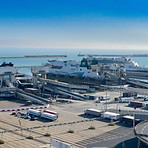
Freight Flow Coordination
Variability in freight arrivals can create operational pressure across ports, terminals, local road networks and the Strategic Road Network.
The Electroporte platform would provide coordinated inland staging and flow-management capability designed to support the sequencing, regulation and release of freight movements alongside existing corridor operations.
Transport decarbonisation
As freight and logistics systems evolve, cross-Channel supply chains will increasingly require infrastructure that supports more efficient, resilient and lower-emission freight movements.

Net-zero
The transition to lower-emission freight operations will increasingly require supporting infrastructure capable of accommodating new vehicle technologies and operating requirements.
The Electroporte platform would provide inland infrastructure designed to support evolving freight operations and lower-emission logistics activity.

Road to Rail
As freight systems evolve, greater rail integration may support more flexible, resilient and lower-emission freight movements across the Dover Straits corridor.
The Electroporte platform could support future road-to-rail freight interchange opportunities, including potential integration with both the conventional rail network and High Speed 1.

Driver welfare
Modern freight and logistics operations require appropriate driver welfare and support infrastructure, particularly within strategically important freight corridors.
The Electroporte platform would incorporate secure and accessible driver welfare facilities designed to support freight operations across the Dover Straits corridor.
Economic growth and productivity
Reliable and efficient freight movements across the Dover Straits are important to supply-chain performance, economic resilience and long-term competitiveness across the UK economy.
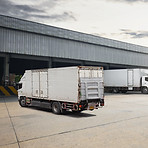
Economy
Freight and logistics operators increasingly require infrastructure capable of supporting more flexible logistics operations and changing supply-chain requirements.
The Electroporte platform could support this through the provision of strategically located logistics space connected to the wider Dover Straits corridor.

Growth
Cross-Channel trade increasingly depends upon efficient customs, border and freight-processing systems.
The Electroporte platform could support more efficient and resilient cross-Channel trade flows through coordinated inland freight operations and customs-related processing activity.

Productivity
The performance of the Dover Straits corridor increasingly depends upon the effective coordination of freight movements and supporting infrastructure.
By combining freight staging, flow management, logistics space, customs-related processing activity and future rail integration within a strategically located inland platform, the Electroporte system could support more efficient and resilient cross-Channel freight operations.
Delivery
Delivering long-term freight-flow management infrastructure across the Dover Straits corridor would require coordination between infrastructure operators, government, local authorities and the logistics sector.
Strategic Coordination Points
-
Long-term planning for more resilient management of Dover Straits freight movements.
-
Better management of roadside freight parking and associated impacts across Kent's communities, businesses, transport networks and public services.
-
Recognition of the importance of inland freight infrastructure to the operation of the Dover Straits corridor.
-
Collaboration between public and private sector organisations on future freight infrastructure delivery and funding.
The long-term operation of the Dover Straits corridor increasingly depends upon the ability to manage freight movements in a reliable, efficient and coordinated manner.
If additional inland operational capability is required in the future, its delivery would be expected to involve collaboration between government, infrastructure operators, local authorities and the logistics sector.
Electroporte is developing a strategic inland platform capable of supporting freight management, logistics activity, customs-related processing and future rail integration.
The platform is intended to be delivered in phases, allowing operational capability to evolve alongside changing corridor requirements.
Delivery would be expected to involve a combination of private investment, infrastructure funding and long-term operational partnerships.
Electroporte controls a strategic site capable of supporting the development of inland freight staging, flow management and operational support infrastructure should future policy and operational requirements indicate a need for such capability.

Location
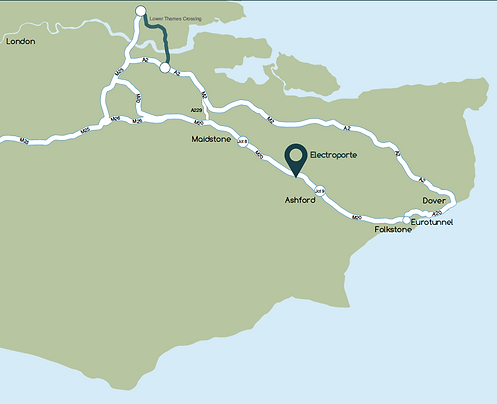
The Electroporte platform would be strategically located at the intersection of the M20, A20, High Speed 1 and the conventional rail network.
Positioned upstream of the Port of Dover and Getlink terminals, and downstream of the M25, M26 and A229 corridor, the site is well placed to support coordinated freight movements across the Dover Straits and wider UK transport network.
Site
Electroporte controls strategically located land capable of supporting the initial phases of an inland freight staging and flow management platform for the Dover Straits corridor.
The site is positioned adjacent to the M20 corridor and connected to the A20, High Speed 1 and the conventional rail network, while remaining outside the Kent Downs National Landscape and away from major urban areas.
The land is predominantly level and located between Junctions 8 and 9 of the M20, providing a rare opportunity for strategically located freight infrastructure within the corridor.

Supporting Information
Explore the documents below providing additional background information relating to freight movements, corridor resilience and the Electroporte inland freight platform proposal.


Let's start making a change today
If you would like to discuss the Electroporte inland freight platform or arrange a meeting, please get in touch.
Hedley Merriman (Managing Director)
Trevor Eyre (Director)
3 Castle Gate
Castle Street
Hertford SG14 1HD